



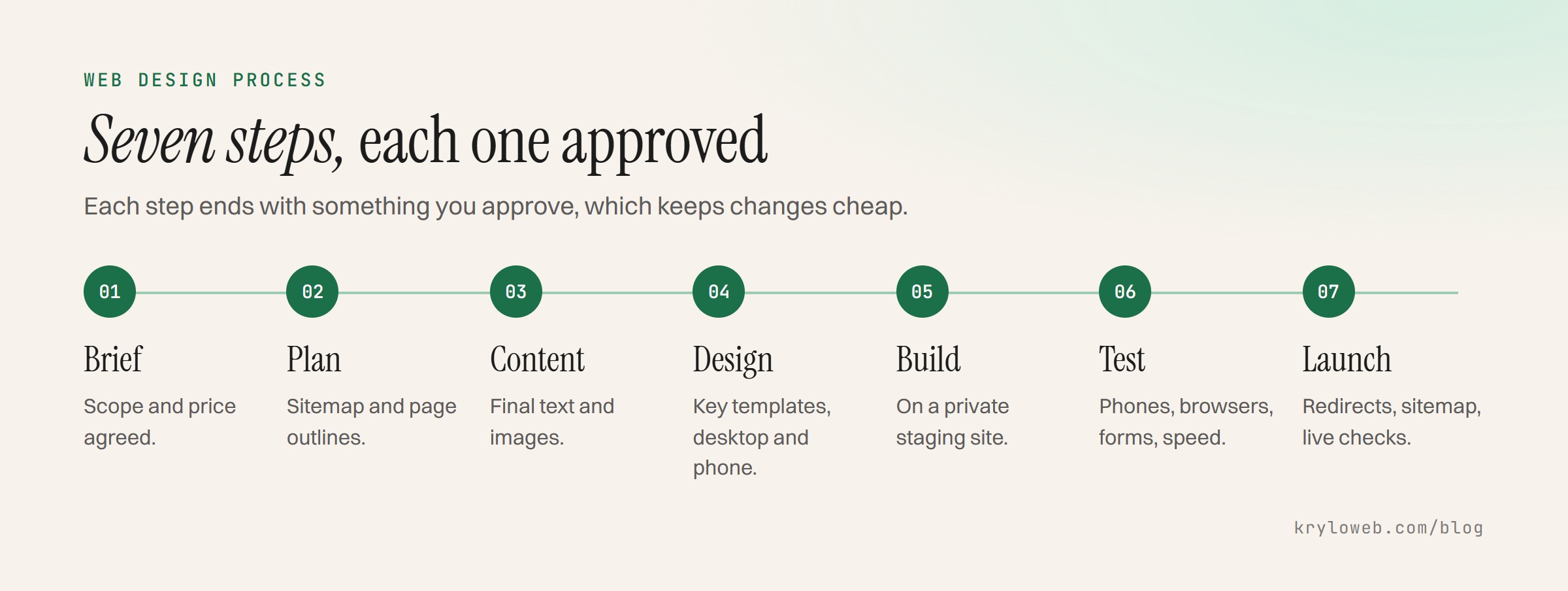
The website design process runs in seven steps: brief, plan, content, design, build, test and launch, followed by care after launch. Each step ends with something you approve before the next begins, which keeps changes cheap: moving a page in a sitemap takes minutes; moving it after the site is built takes much longer. Knowing the steps helps you plan your own time, because most delays come from the client’s side, usually content.
This is how we run projects. Other studios use different names, but the order is much the same.
1. Brief
What happens: we agree what the site is for, who it is for, the pages and features it needs, the budget and the timeline.
What you provide: answers to our questions, examples of sites you like, access to your current site and analytics if you have them.
What you approve: a written scope and price.
A website RFP makes this step faster.
2. Plan
What happens: the sitemap (every page and how they connect), the main user journeys, and the structure of key pages. For redesigns, an inventory of current pages and a redirect plan.
What you provide: feedback on the sitemap and priorities.
What you approve: the sitemap and page outlines.
3. Content
What happens: text and images are written, gathered or edited. Ideally this starts during planning and runs alongside design.
What you provide: text, or input for us to write from; photos; logos; any documents to link.
What you approve: final text for each page.
This is the step that stalls most projects. Design can start with draft text, but the build can’t finish without final content.
4. Design
What happens: the look of the site, starting with key pages such as the homepage and a service page, on desktop and phone. Once those are approved, the remaining templates follow the same system.
What you provide: feedback, in writing, consolidated from everyone who needs a say.
What you approve: designs for each template.
Tip: collect feedback from your whole team before sending it. Conflicting rounds from different people are the second most common cause of delay.
5. Build
What happens: the design becomes a working site on the chosen platform, on a private staging address. Content goes in, features are connected, SEO settings and structured data are set.
What you provide: access to accounts the site connects to, such as booking, payments or email tools.
What you see: a staging link you can click through as the build progresses.
6. Test
What happens: every page on phones and desktops, in Chrome, Safari and Firefox; every form and payment tested end to end; speed, accessibility and SEO checks; redirects tested for redesigns.
What you provide: your own test run, especially of forms and anything customers pay through.
What you approve: the site, ready to launch.
7. Launch
What happens: the site goes live, redirects switch on, the sitemap goes to Search Console, analytics are checked, and we run the live site through the tests again.
What you provide: a launch time that suits you; avoid Friday evenings.
After launch
Real visitors find things testing doesn’t. The first weeks are for fixing issues, watching search data and making small improvements. After that, a site needs updates and occasional changes; our website management plans cover that.
How long does the website design process take?
It depends on size and how quickly content and feedback arrive. As a rough guide, a small business site often takes a few weeks from approved scope to launch, and larger sites take longer. The fastest projects have content ready before design starts and one person collecting feedback.
Where projects stall, and how to avoid it
| Stall | How to avoid it |
|---|---|
| Content isn’t ready | Start writing during planning; use draft text for design |
| Feedback from many people, in many rounds | Name one person to collect and send feedback |
| Scope grows mid-project | Keep a list of “phase two” ideas instead of adding them now |
| Accounts and logins missing | Gather them in the brief stage |
| Late changes to approved designs | Review designs on a phone, not just a large screen |
Questions people ask
Can steps overlap? Yes. Content and design often run together, and building can start on approved templates while others are still in design.
How many revisions are normal? We agree the number in the proposal. Two rounds per stage is common across the industry.
Do I need to be involved all the way through? At each approval point, yes. Between them, less.
For what each stage costs, read custom website design cost, and for choosing who runs the process, see how to hire a web developer. Our services page covers what we build.